Astrophotography

Stargazing has always been a source of wonder for me. It sparked my curiosity about the universe and drives me to capture its beauty: glowing nebulae, young star clusters, and the details of our own Milky Way. These are some of the deep-sky images I have taken, each one the result of long nights under dark skies.

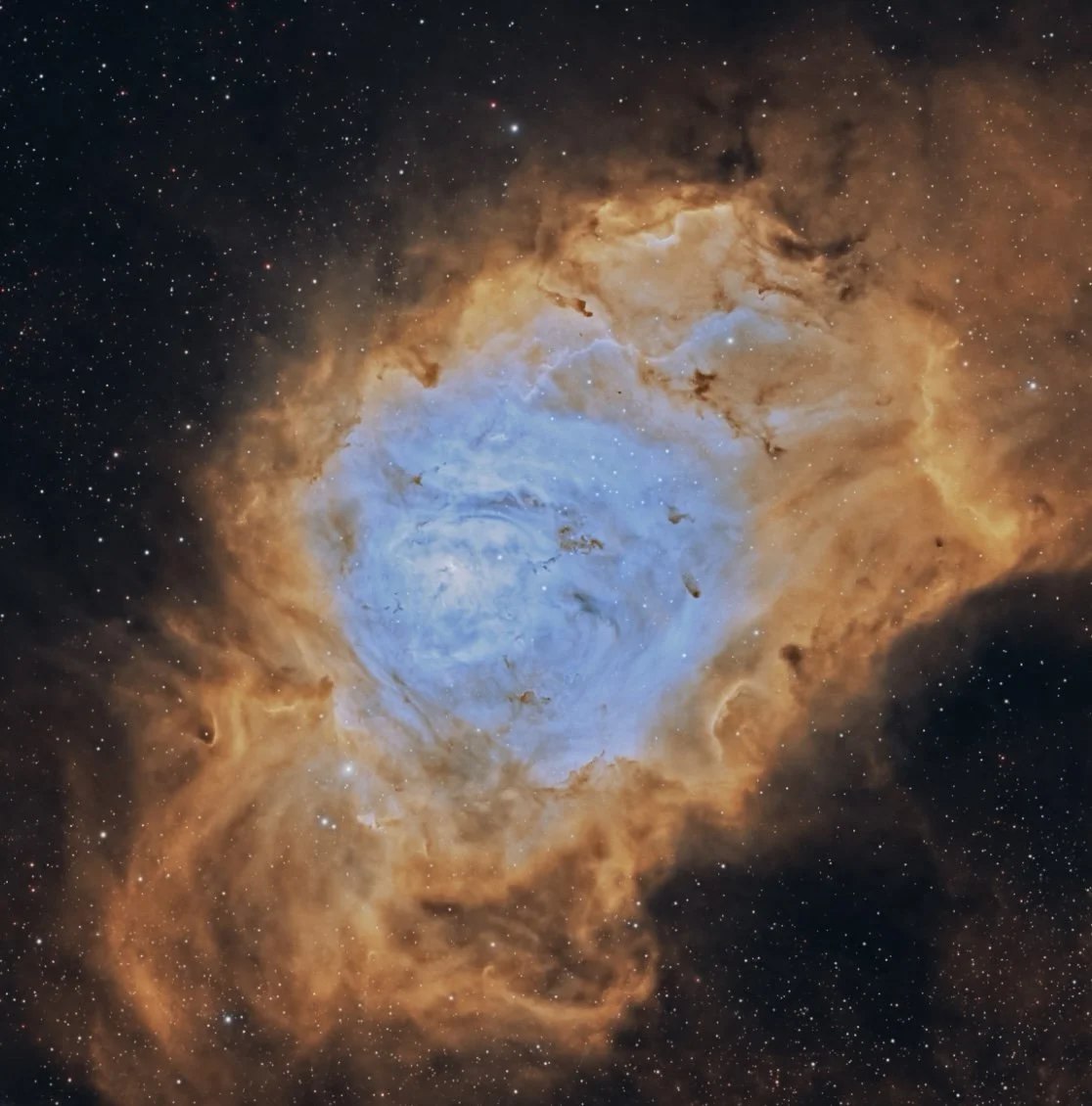
The Lagoon Nebula in the Hubble palette, with a blue core and golden outer clouds
Hubble palette
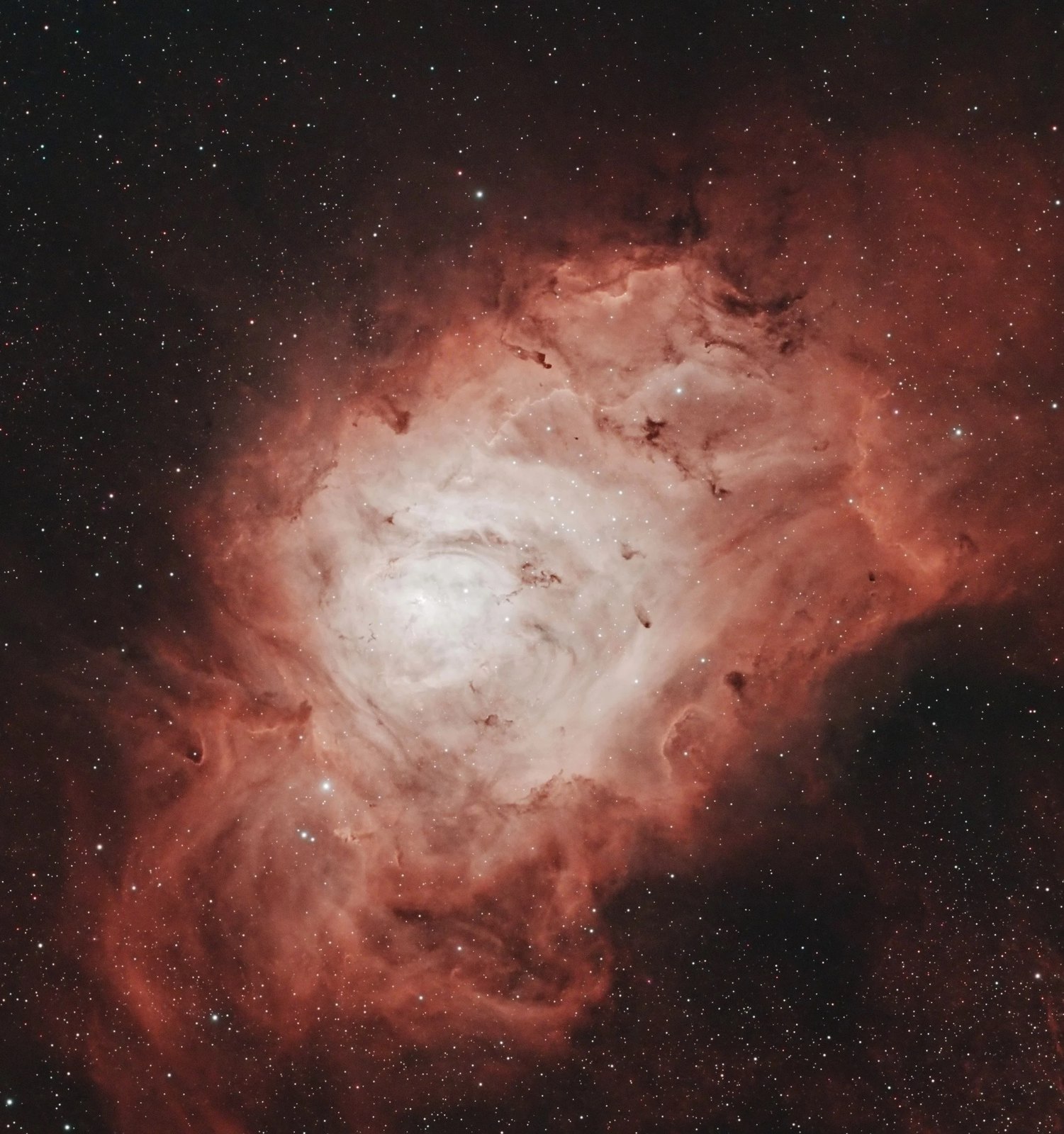
The Lagoon Nebula in near-natural color, glowing red
Near-natural color

The Lagoon Nebula

M8Emission nebulaSagittarius~5,200 light-years

My first-ever attempt at deep-sky astrophotography. The first image is processed in the Hubble palette, where the narrowband channels are mapped to red, green, and blue. The second is closer to the nebula's natural color, reddish because it is made mostly of hydrogen.

I couldn't describe the excitement I felt when it first appeared on my screen. Getting there meant lugging over 25 kg of equipment, being out in the middle of nowhere (constantly alert for wildlife), and staying up all night, and all of it was part of the magic.
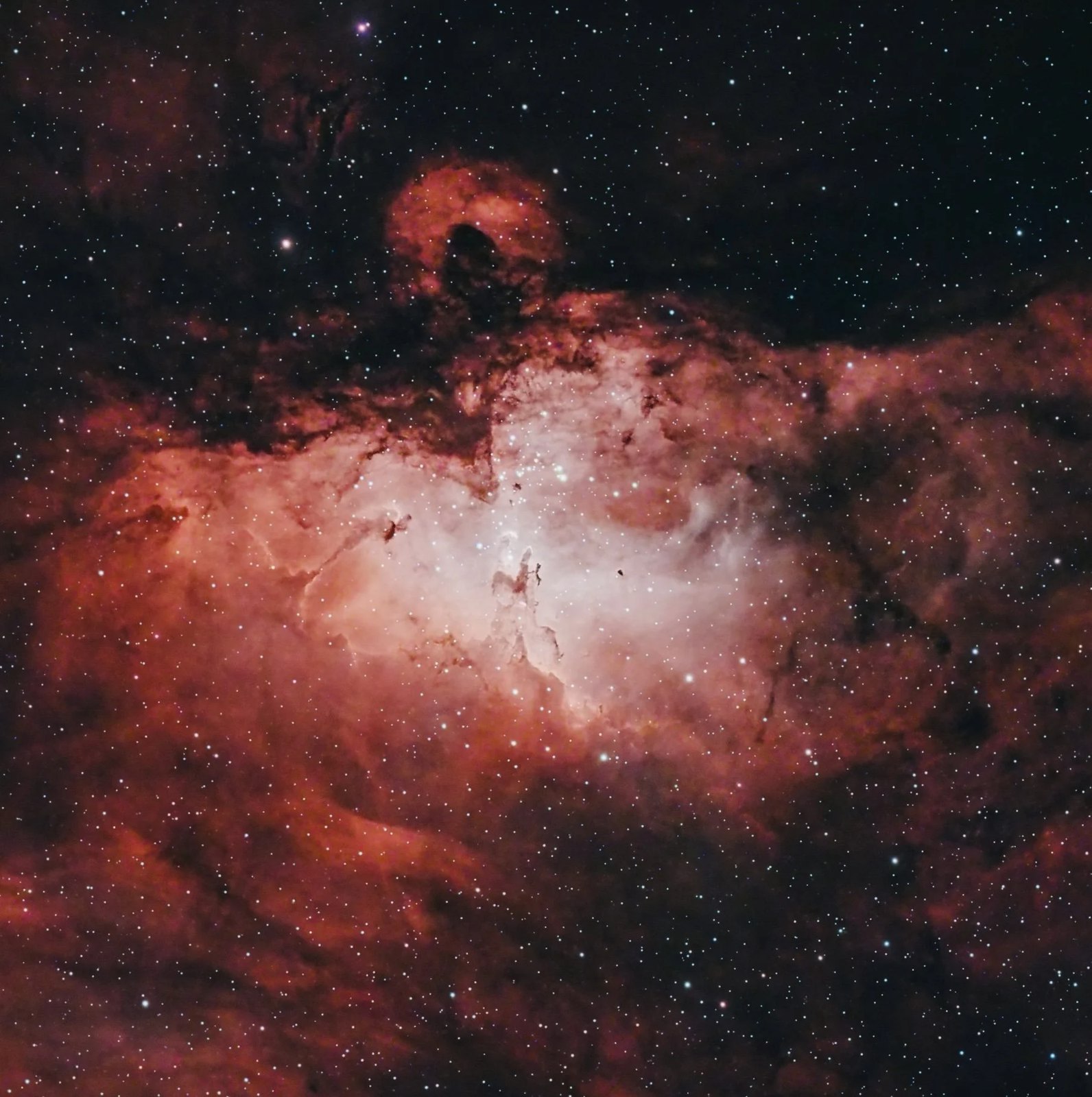
The Eagle Nebula, a bright core surrounded by red clouds of gas

The Eagle Nebula

M16Star-forming regionSerpens~5,700 light-years

A cluster of stars and a region of active star formation, covering about 70 by 55 light-years. At its heart sit the Pillars of Creation, the towering tendrils of gas and dust made famous by the Hubble Space Telescope in 1995.

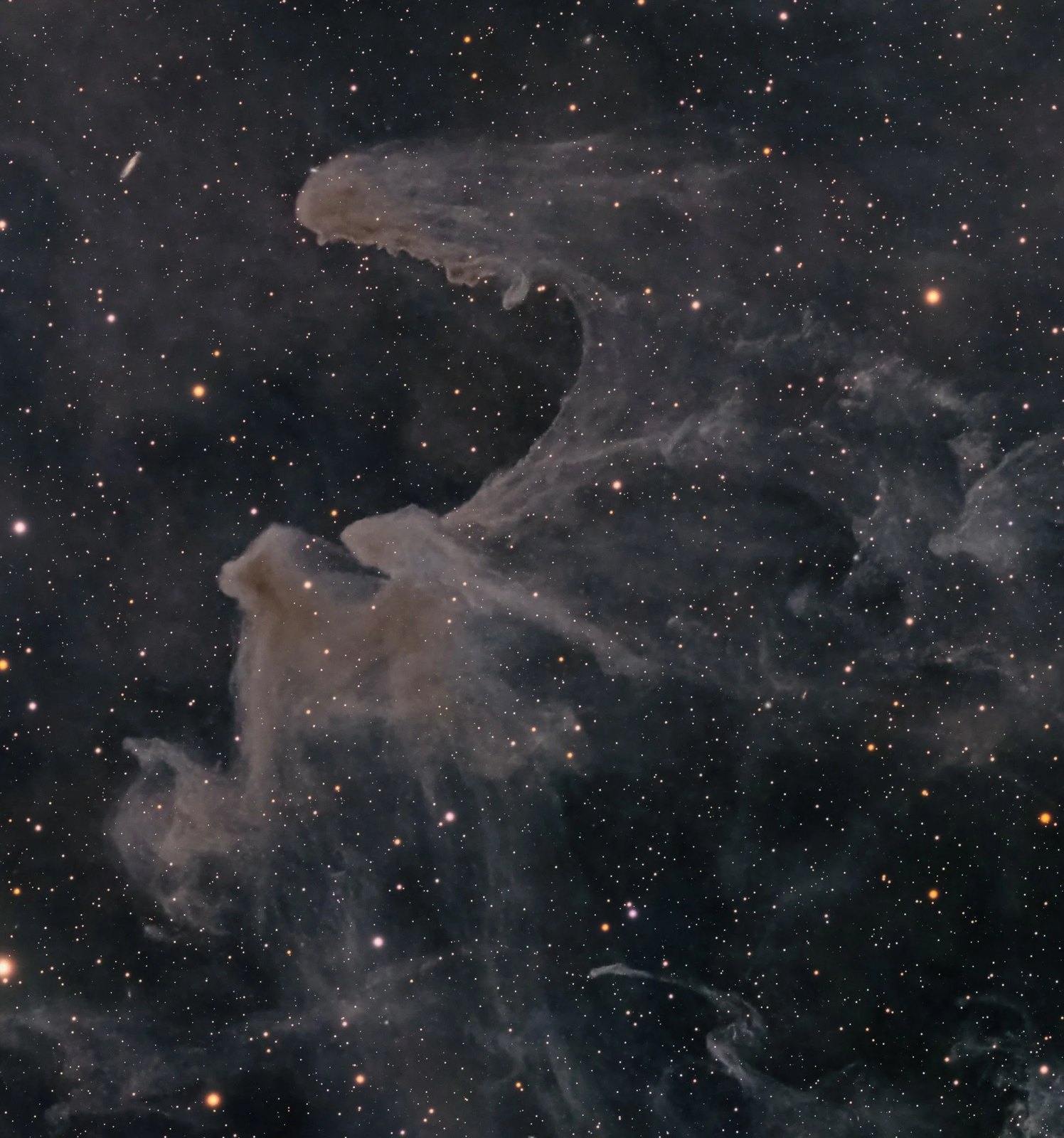
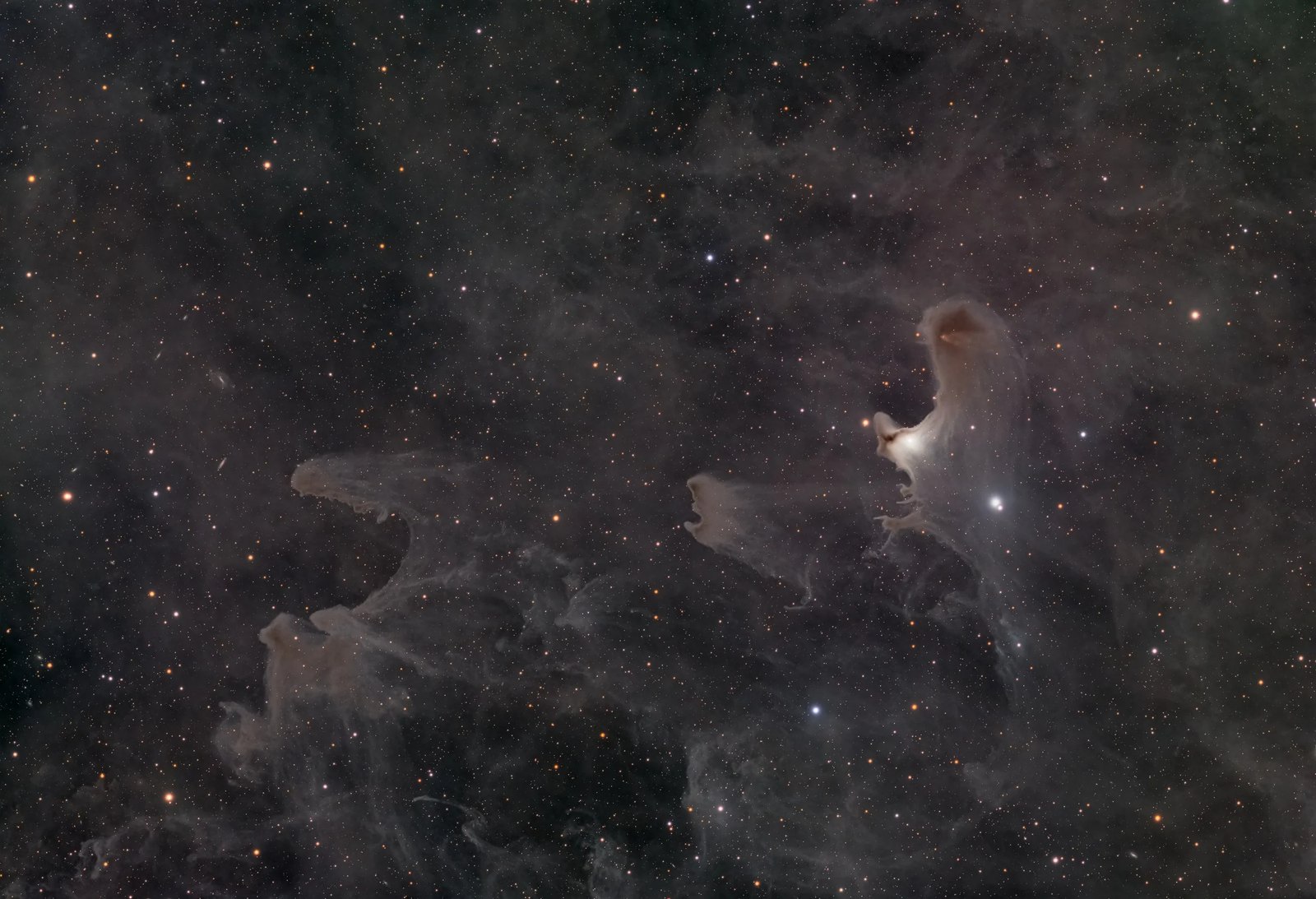
Wide view of the Ghost Nebula, pale dust clouds against a star field
Wide field
Close-up of the Ghost Nebula's dust clouds
Close-up

The Ghost Nebula

Sh2-136 · vdB 141Reflection nebulaCepheus~1,200 light-years

A field of faint, starlight-reflecting dust about 2 light-years across, where stars are in the early stages of forming. It is a challenging target: a broadband subject that gains nothing from narrowband filters, so capturing its true colors takes a dark sky far away from city light pollution.

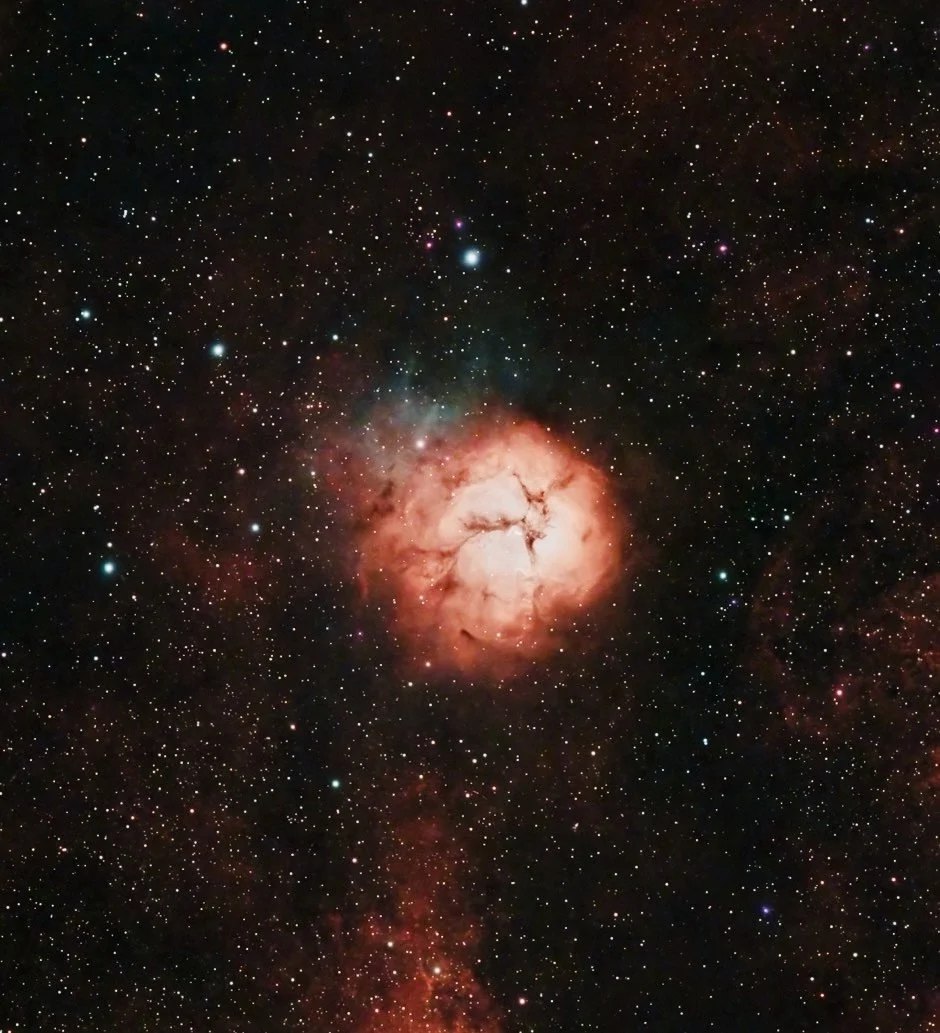
The Trifid Nebula, a red globe divided by dark dust lanes

The Trifid Nebula

M20Emission, reflection and dark nebulaSagittarius~5,000 light-years

A star-forming region that combines emission, reflection, and dark nebulae, with striking dark lanes dividing its glowing gas clouds.

My image is missing the blue tones because I forgot to remove the narrowband filter. It passes the red light of hydrogen and blocks most broadband light, including the blue of the reflection nebula. A lesson learned.

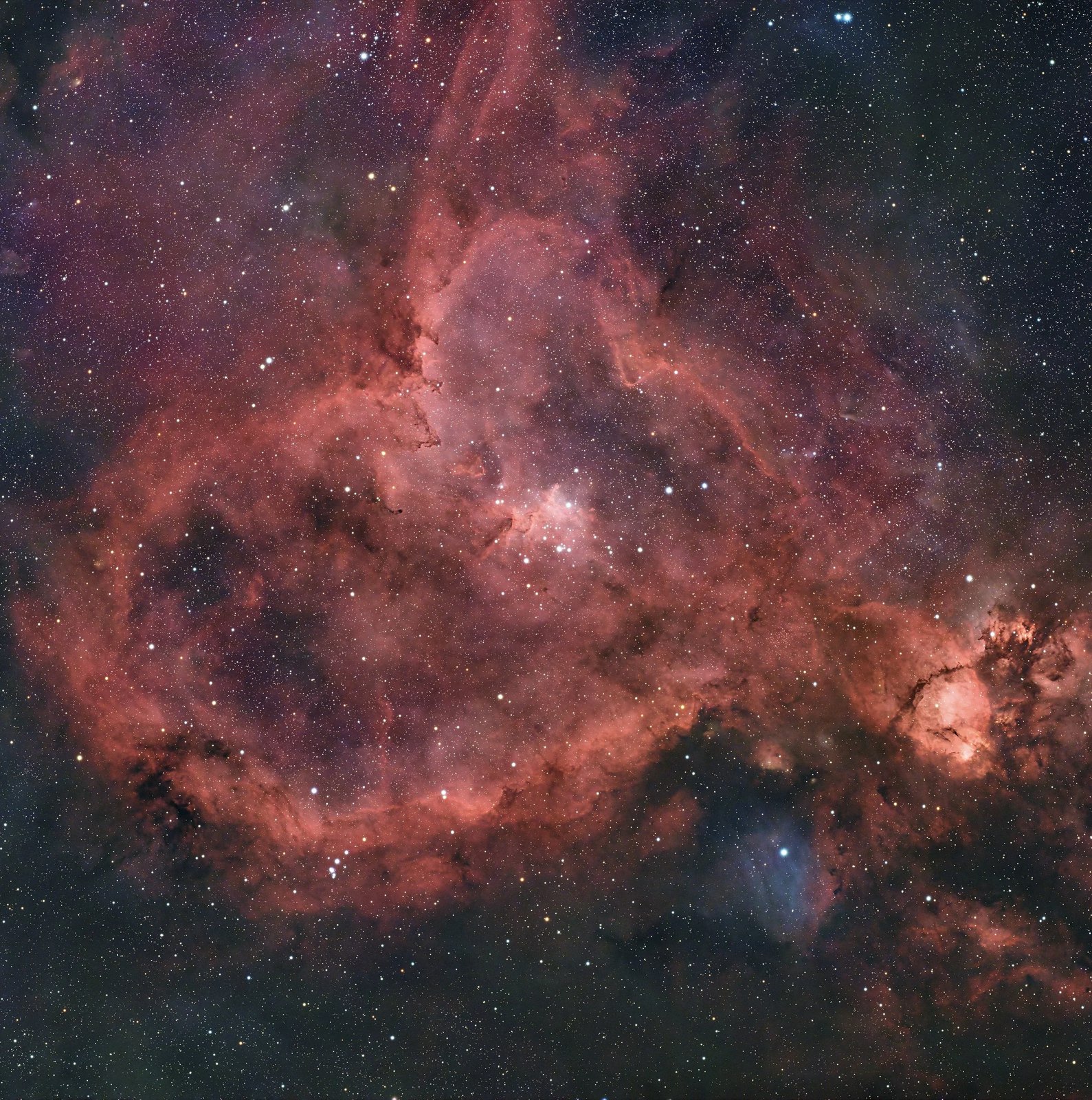
The Heart Nebula, a heart-shaped ring of red gas

The Heart Nebula

IC 1805Emission nebulaCassiopeia~7,500 light-years

An emission nebula in the Perseus Arm of the Milky Way. Its shape is driven by stellar winds from the hot stars in its core, and it spans almost 2 degrees of sky, about four times the diameter of the full Moon.

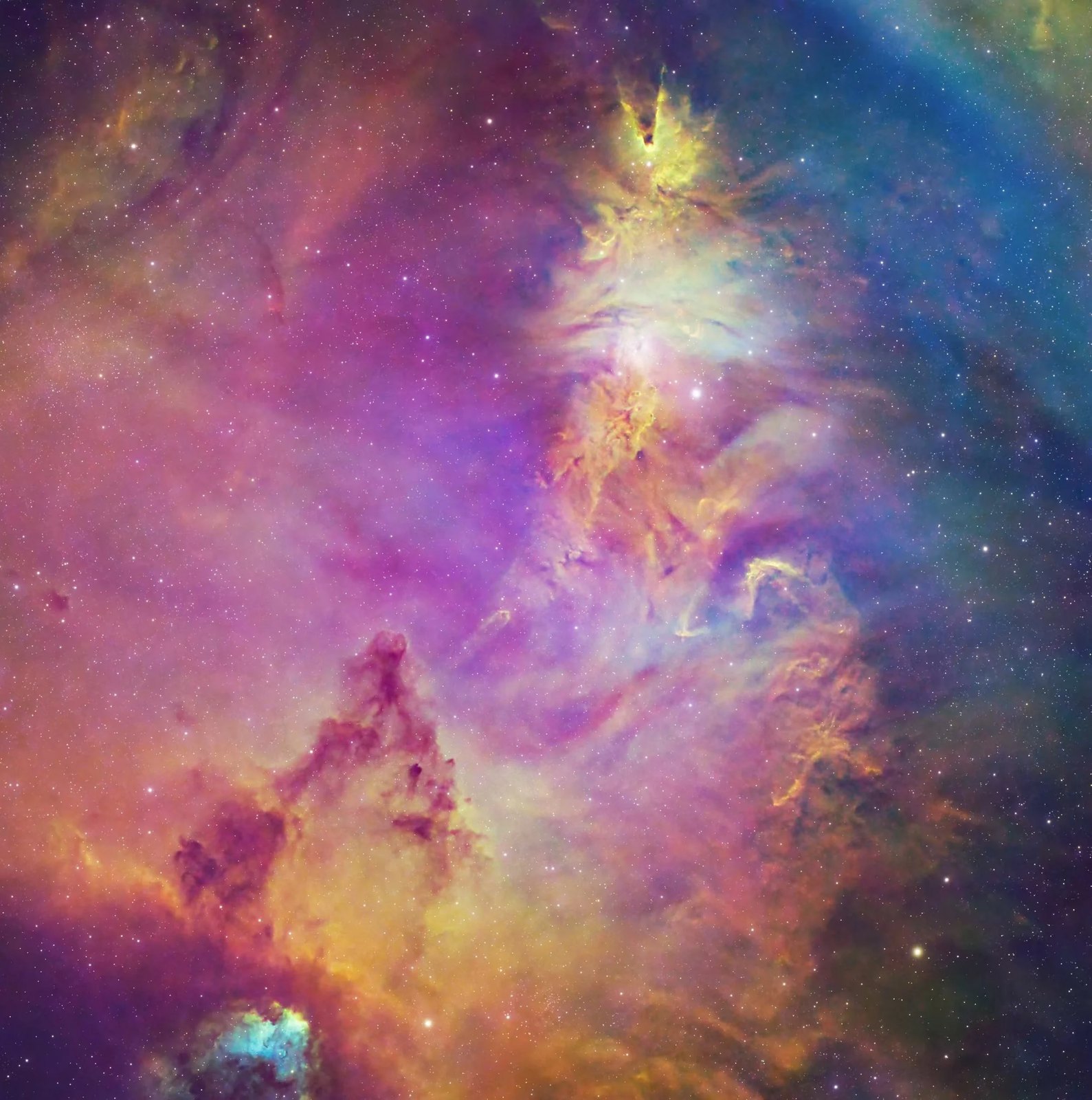
The Christmas Tree Cluster in vivid purple, gold and blue

The Christmas Tree Cluster

NGC 2264Young star clusterMonoceros~2,500 light-years

A cluster of young stars in our Milky Way, between about one and five million years old. Its stars range from less than a tenth of the Sun's mass to about seven solar masses.

My setup

Mount
UMi 17 Lite
Telescope
Sky Rover 80 APO Pro
Camera
ZWO ASI533MC Pro
Guide scope
Angeleyes
Guide camera
ZWO ASI662MC
Filter
Optolong L-Ultimate
Controller
ZWO ASIAIR Plus